
The refurbishment of Dunedin Town Hall and Municipal Chambers involved uniting three historically significant buildings from different eras into a cohesive civic complex. Originally designed by Robert Lawson in the 1870s, the project required careful attention to heritage, functionality, and accessibility. Our role was to provide bespoke carpet solutions that support high-traffic circulation, council chambers, and public spaces while enhancing the architectural character of this New Zealand civic building.TOWN HALL
DUNEDIN
Design intent
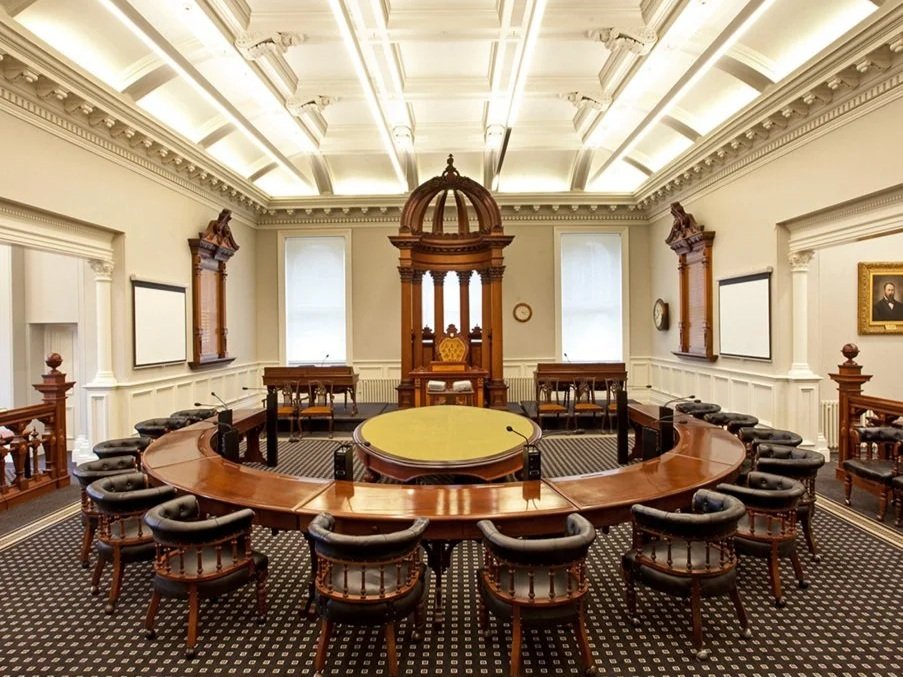
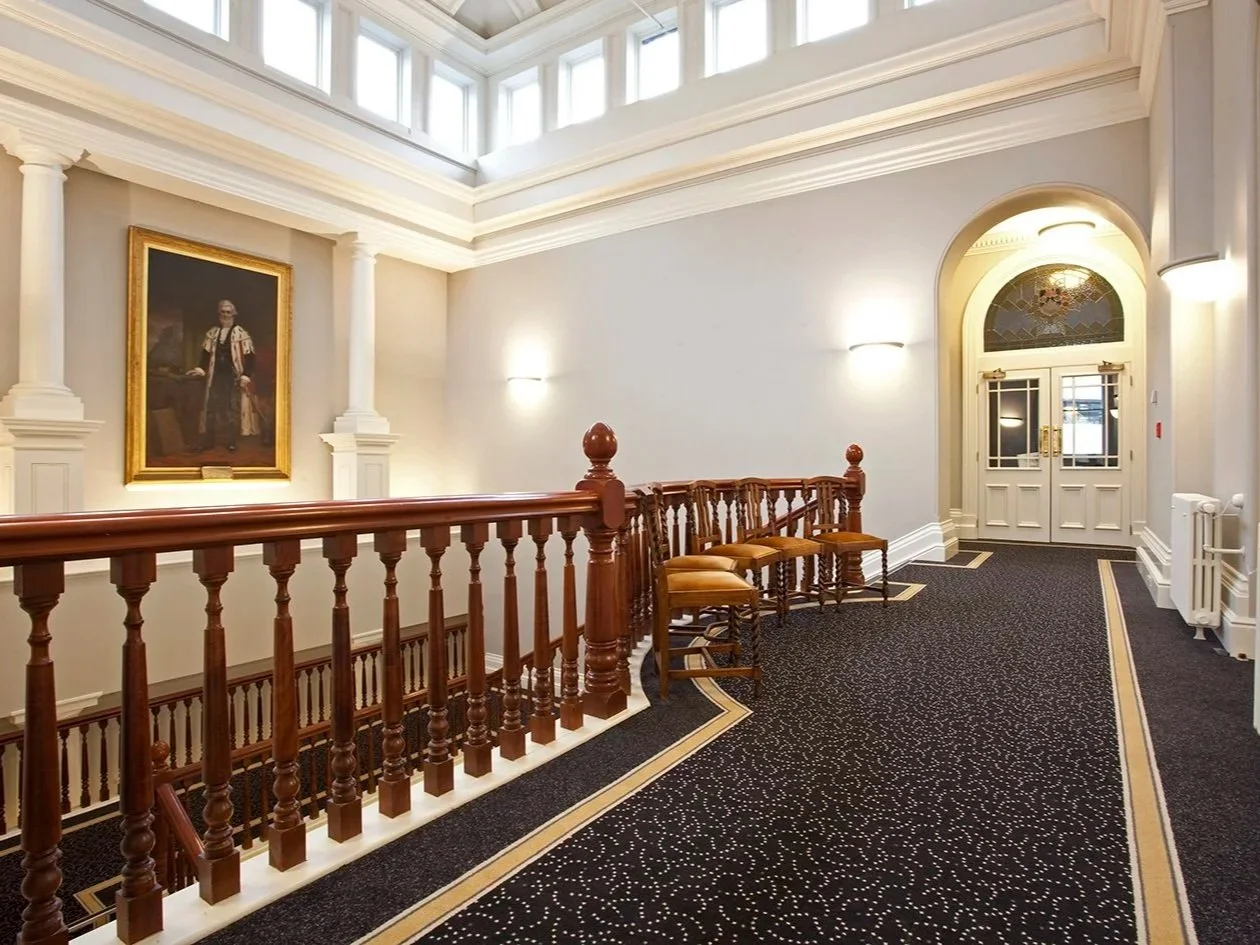
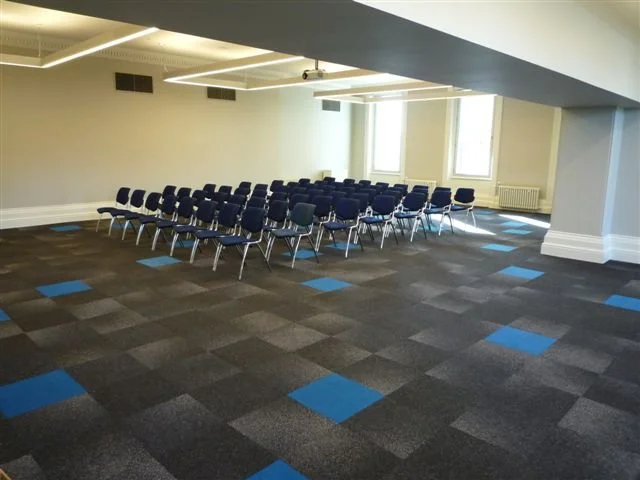
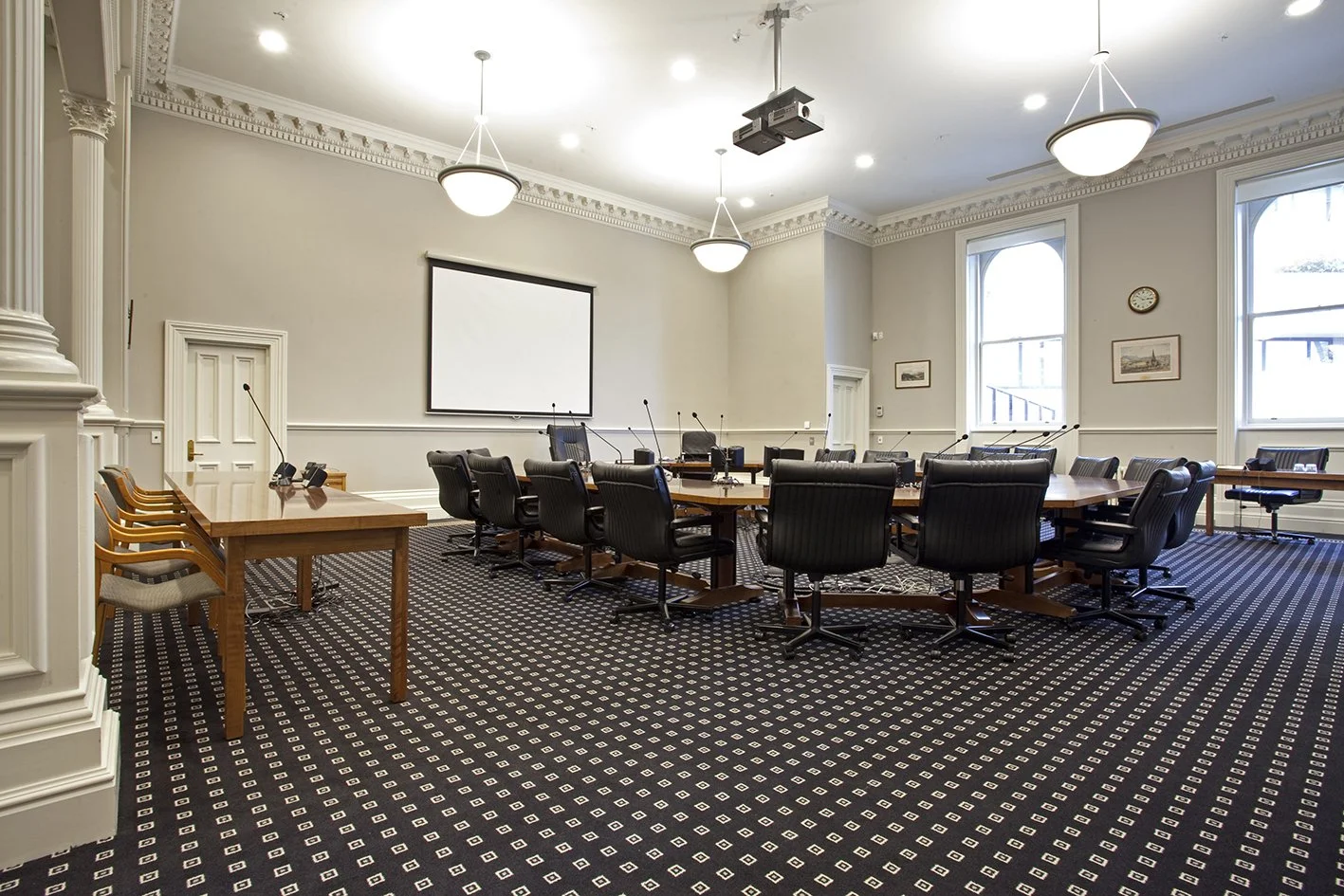
The design approach focused on durability, practicality, and visual cohesion. Dye injected broadloom was specified for stairwells, corridors, and council chambers, delivering a robust, elegant foundation, while dye injected carpet tiles were chosen for back-of-house areas for flexibility and performance. Neutral tones and subtle patterns complement the warm timber, stone, and metal finishes, creating a harmonious environment that respects the building’s heritage while providing a functional, modern workspace for staff and public users.-
Opus Architecture
-
Working closely with architects, heritage consultants, and the project design team, carpet layouts were carefully mapped to enhance circulation, highlight public spaces, and reinforce functional zoning. Multiple samples and prototypes were developed to ensure colour, pattern, and texture harmonised with timber, stone, and other interior finishes. This collaborative approach emphasised bespoke carpet design and New Zealand craftsmanship, delivering a solution that balances aesthetic refinement, heritage sensitivity, and long-term performance.materials.
-
Construction: Dye Injected Broadloom Cut Pile & Loop Pile Carpet Tiles
Fibre: Nylon (broadloom), Nylon (tiles)
outcome
The completed installation provides a durable, visually cohesive foundation throughout Dunedin Town Hall and Municipal Chambers. Broadloom areas support public circulation, council chambers, and administrative spaces, enhancing comfort, acoustics, and spatial clarity, while carpet tile zones provide practical, high-performance flooring for back-of-house areas. This project demonstrates how thoughtful material selection and bespoke design can unify complex heritage buildings while meeting contemporary functional and sustainability standards in a high-profile New Zealand civic environment.